About All Saints
History & Mission
“All Saints Episcopal Church is a diverse family welcoming all into a journey of growing in Christ.”
We are one parish worshipping in two historic chapels: St. Agnes on Church Street and St. Cyprian's on Roller Mill Road, bound together by a common faith and the love of God that calls all people into community. All Saints Episcopal Community officially became All Saints Episcopal Church in November 2014, unified as one church with two chapels.
Our Founding
All Saints Episcopal Church traces its roots to 1994, when a covenant relationship was formed between two Franklin parishes: the Community of St. Agnes Episcopal Church and St. Cyprian's Episcopal Church, each with over a century of ministry in the region. The Rev. Dorrie Pratt, a 2005 graduate of General Theological Seminary in New York City, was called as the first priest to serve the united Community.
In the years that followed, the two congregations evolved from sharing one priest to truly living, loving, and working as one parish with two homes.
St. Agnes Episcopal Church
St. Agnes of Rome
Born in Rome around A.D. 291, St. Agnes is remembered for her unwavering faith and courage as a young Christian martyr whose witness continues to inspire believers around the world.
In 1877, the Albert Siler family of Macon County and the William Beal family of Cherokee County persuaded Bishop Lyman to establish the Episcopal Church in southwestern North Carolina. The Bishop sent the Rev. John Archibald Deal, who settled in the Franklin area, teaching and holding services in private homes and the local courthouse before establishing a permanent presence on Church Street in 1884.
St. Agnes' beautiful Gothic Revival building was completed in the spring of 1888, constructed of handmade bricks formed from clay taken from the nearby Little Tennessee River. Funding was secured in part by Mr. and Mrs. E.H. Bell of New York City, who wished the church to serve as a memorial to their daughter, Agnes. The church was dedicated by Bishop Lyman: To the Glory of God and in Loving Memory of Agnes Souter Bell, died December 27, 1878.
The pews were crafted by students of James Kennedy in the St. Cyprian's workshop. What began in 1888 with a membership of 12 from three families continues its faithful ministry on Church Street today.
St. Cyprian's Episcopal Church
St. Cyprian of Carthage
Born in Carthage, North Africa (modern-day Tunisia), around A.D. 210, St. Cyprian was a bishop, theologian, and martyr whose leadership helped strengthen the early Church during a time of persecution.
St. Cyprian's had its beginnings in 1882–1884 when Rev. Deal became interested in Franklin's African-American community. In 1886 a small frame building was constructed for worship and study, using oak for the floors and poplar for the walls, all harvested and milled on site.
On January 15, 1887, James T. Kennedy (age 21, from Columbia, SC) opened a school in the tannery packing house. His first class had two students, aged 8 and 30; it eventually grew to 85 students ranging from age 6 to 60. Kennedy was a gifted craftsman whose handiwork is still present in the chapel today: the altar rail, hymn board, pulpit, and front altar are oak; the lectern is cherry; the back altar and cross are maple. His signature is barely visible on the cover of the baptismal font.
Kennedy was ordained to the diaconate in 1886 (or 1890, records differ) and later to the priesthood. Between 1911 and 1978, supply clergy guided the congregation. In 1979 St. Cyprian's became an integrated congregation in the Diocese of Western North Carolina, and the sanctuary was expanded in 1983.
Both St. Cyprian's and St. Agnes have long served as a community and learning center, hosting Head Start classrooms, Hospice offices, AA groups, and leathercrafters over the years.
The “Chapel School”
What began in the tannery packing house grew into a beloved institution known locally as the “Chapel School,” which operated from 1928 to 1965. In its early years two teachers served about 40 students; by the 1950s the same two teachers were guiding as many as 130 children. Supported by a federal Office of Education grant, the Diocese of Western North Carolina, and the generosity of countless individuals, the accredited school prepared its students to continue on to high school and college.
Alongside the required curriculum, children learned Bible study, singing, and crafts such as weaving, needlepoint, and basket making. They published a school newspaper called the Chapel Bell, ran a school store, and were celebrated for their musical gifts, singing in the choir of St. Cyprian's and forming a gospel group that performed throughout the community. The Chapel School closed in 1965 with the desegregation of the public schools, but its legacy endures in the generations it shaped.
The Rev. James T. Kennedy
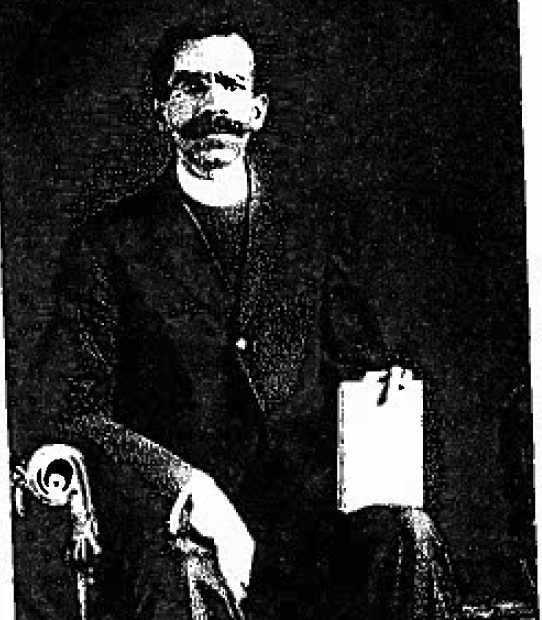
Born of enslaved parents in Columbia, South Carolina on August 25, 1865, James Thomas Kennedy was confirmed in the Episcopal Church at eighteen and answered an advertisement seeking a church worker in Macon County. He arrived in Franklin in January 1887 and devoted the next twenty-four years to St. Cyprian's as teacher, craftsman, and minister, building the chapel alongside Rev. Deal and furnishing it with pieces he made by hand.
Ordained a deacon in 1890 and later to the priesthood, Kennedy was sent to St. Matthias in Asheville in 1911, where he became its first rector. In 1920 he was named Archdeacon, rising from lay reader to the highest office he could attain in just thirty-two years. By 1955 he held the distinction of being the oldest Black Episcopal minister in the United States. His influence on the Black community of Macon County was profound and reaches into the present generations.
“I just did what had to be done. I accepted life as things came and liked it. I think the greatest of my accomplishments was teaching people to read and write. The results of that work reach down to the present day.”
Our Values
Welcoming
Every person is made in the image of God and deserves to be received with dignity, warmth, and love, wherever they are on their journey.
Worshipping
Rooted in the rich liturgical tradition of the Episcopal Church, we gather to offer our praise, prayers, and very selves to God.
Serving
Inspired by Christ's example, we are called to serve our neighbors in Franklin, across North Carolina, and beyond.